What is an ATEX Explosion-Proof Telephone?
An ATEX explosion-proof telephone is a specialized communication device certified for use in hazardous environments where explosive atmospheres may be present. ATEX (from the French ATmosphères EXplosibles) is the EU directive that governs safety of equipment in potentially explosive atmospheres . An ATEX explosion-proof telephone is designed and tested to prevent ignition of flammable gases, vapors, or dusts, even under fault conditions. These phones undergo rigorous testing to ensure they do not produce sparks, arcs, or excessive heat that could ignite an explosive environment. They typically bear the distinctive “Ex” symbol (a hexagon with “Ex” inside) and are marked with compliance to the ATEX directive and applicable standards .
Typically, ATEX explosion-proof telephones are constructed with robust, sealed enclosures and use intrinsic safety (Ex i) or other approved protection methods to limit electrical energy. This ensures that the phone’s internal components – including circuits, wiring, and the handset – do not exceed safe energy levels. For example, an ATEX-certified phone might be built with a flameproof enclosure or a sealed housing that prevents sparks from escaping, or it might use intrinsic safety barriers to restrict voltage and current in the phone’s circuits. By meeting these stringent criteria, ATEX explosion-proof telephones allow safe communication in environments where a regular phone could cause a catastrophic explosion .
Why Are ATEX Explosion-Proof Telephones Important?
ATEX explosion-proof telephones are crucial in industries with hazardous atmospheres to ensure worker safety and operational continuity. In environments like oil refineries, chemical plants, gas processing facilities, mines, and grain elevators, the presence of flammable gases, vapors, or dust means even a tiny spark can trigger an explosion. A regular mobile phone or standard landline is not designed for such conditions and could pose a deadly ignition risk . An ATEX-certified telephone provides a reliable means of communication that is safe and compliant in these zones, preventing accidents and protecting personnel.
Beyond safety, these phones are important for business continuity and efficiency. In hazardous areas, maintaining communication is vital for emergency response, coordination, and safety system alerts. For instance, an explosion-proof phone can be used to quickly call for help or evacuate workers in the event of a leak or fire. They also enable routine operations like checking equipment status or receiving safety messages without endangering the workforce. Without proper explosion-proof communication, operations might grind to a halt or risk being non-compliant with regulations, leading to fines or shutdowns. By investing in ATEX telephones, companies ensure they meet strict safety standards and can keep operations running smoothly in even the most challenging environments .
Applications of ATEX Explosion-Proof Telephones
ATEX explosion-proof telephones are used across a wide range of industries and settings where explosive atmospheres are present. Key sectors include:
Oil and Gas: On offshore oil rigs, refineries, and petrochemical plants, these phones are indispensable for safe communication between workers and control centers. They are used for routine operations like maintenance check-ins, emergency callouts, and coordination during operations such as loading or unloading fuel . ATEX phones allow workers to communicate without risk of igniting flammable gases that might be present.
Chemical Industry: In chemical plants, storage facilities, and processing plants, explosive vapors or dusts are common. Explosion-proof telephones ensure safe communication in areas like process control rooms, pump stations, and warehouse areas where flammable chemicals are handled. They are used for internal communication, emergency alarms, and connecting with other safety systems.
Mining and Quarrying: In underground mines and surface mining operations, hazardous atmospheres can be present (e.g. methane gas in coal mines). ATEX-certified telephones provide reliable communication for miners to call for help, report incidents, or communicate with supervisors. They are also used in tunneling projects and other mining-related infrastructure where gas or dust explosions could occur .
Power Generation and Utilities: At power plants (especially those using gas turbines or fossil fuels), refueling stations, and electrical substations, there is a risk of combustible gases or dust. Explosion-proof phones are used for communication in control rooms, maintenance areas, and in emergency situations. For example, they might be installed in generator halls or boiler rooms to allow staff to contact emergency services if a fire or explosion hazard arises.
Food and Grain Processing: In grain elevators, flour mills, and food processing plants, combustible dust is a concern. ATEX explosion-proof telephones are used in these facilities to maintain communication in areas like silos, dust collection systems, and processing areas. They enable safe communication between workers and with external emergency services without triggering dust explosions.
Other Industries: Other applications include bulk material handling facilities (like cement plants or fertilizer plants), pharmaceutical manufacturing (where dust can be explosive), and even military and defense installations where safety of communication is paramount. Essentially, any industry where explosive atmospheres are a possibility – such as gas storage, paint booths, spray finishing areas, or bulk loading terminals – will use ATEX-certified telephones for safe communication .
In summary, ATEX explosion-proof telephones are deployed wherever there is a need for reliable communication in high-risk environments. Their presence ensures that personnel can stay connected for safety and operational reasons, while minimizing the risk of ignition.
Certifications and Compliance Requirements
To be legally used in hazardous areas, ATEX explosion-proof telephones must meet strict ATEX certification requirements. The primary certification is the ATEX Directive 2014/34/EU, which mandates that equipment used in potentially explosive atmospheres be marked with the CE symbol and an ATEX approval. This involves demonstrating compliance with the relevant European standards, typically IEC 60079 series standards for explosion protection . The ATEX directive covers two types of environments: gas/vapor atmospheres (zones 0, 1, 2) and dust atmospheres (zones 20, 21, 22). ATEX telephones are certified for specific zones and atmospheres, and they bear markings that indicate their zone applicability (e.g. “Zone 1”, “Zone 22”) and protection type (e.g. “Ex i” for intrinsic safety, “Ex d” for flameproof) .
Additionally, many ATEX explosion-proof telephones also carry IECEx certification. IECEx is an international certification system (IEC 60079-17) that harmonizes explosion protection standards globally. Having IECEx certification means the phone meets the same rigorous standards as ATEX but can be used in countries that recognize IECEx, such as Asia-Pacific, Africa, and the Middle East . In practice, most ATEX-certified telephones are also IECEx-certified, allowing them to be used in multiple regions with one device. In the European Union, the IECEx certificate often serves as the primary proof of compliance, and an ATEX marking is added to meet EU labeling requirements . Some manufacturers also pursue North American UL/CSA certifications for use in the US/Canada, though those are not required in Europe. It’s important to note that IECEx is recognized in many countries; for example, one IECEx certificate is sufficient for sale in Australia, New Zealand, Singapore, and Israel, eliminating the need for additional national approvals .
To obtain these certifications, manufacturers must conduct extensive testing and quality assurance. The testing typically includes evaluating the phone’s design for explosion protection (e.g. energy-limiting circuits, flameproof enclosure integrity), as well as environmental and functional tests. Compliance with ATEX Directive 2014/34/EU requires that the manufacturer have a Quality Assurance Notification (QAN) in place – essentially an internal quality management system that ensures consistent compliance with the directive’s requirements . Similarly, IECEx requires a Quality Assessment Report (QAR) for the manufacturer’s quality system. These QAN/QAR documents are reviewed by the certification bodies to verify that the manufacturer’s processes will maintain compliance over time . All ATEX-approved products must have their ATEX Certificate of Conformity (CoC) on file, which includes the test reports and quality assurance checks .
In summary, an ATEX explosion-proof telephone must be ATEX-certified (CE-marked) for the specific hazardous zone and atmosphere it is used in, and it should ideally have IECEx certification for international compatibility. Compliance with these standards ensures that the phone is safe and legally approved for use in explosive environments. Any manufacturer or supplier of ATEX telephones should be able to provide the relevant certificates and documentation, and users should always verify that the equipment they use meets the required standards for their specific location .
Key Features and Design Considerations
ATEX explosion-proof telephones are engineered with several key features and design considerations to ensure safety and reliability in harsh environments:
Robust Construction and Enclosure: These phones are built with sturdy, sealed enclosures to contain any internal sparks or explosions. They often use materials like cast aluminum, stainless steel, or fiberglass-reinforced polymer for the housing. The enclosure must be dust-tight and water-resistant (typically meeting IP65 or higher ratings) to protect against ingress of dust, moisture, and corrosive substances. A typical ATEX phone will have an IP66 rating, which means it is dust-tight and protected against powerful water jets . This durability ensures the phone can withstand physical impacts, chemical exposure, and environmental extremes common in industrial settings.
Intrinsic Safety or Other Protection Methods: As mentioned, ATEX telephones commonly use intrinsic safety (Ex i) as their primary protection method. This means the electrical energy in the phone’s circuits is limited to safe levels, so even in the event of a fault, the phone cannot produce a spark or hot surface that could ignite a flammable atmosphere. The design uses components like Zener diodes, resistors, and galvanic isolators to limit voltage and current, and often an IS barrier is used to separate the phone’s circuit from the external power supply . In some cases, phones might use a flameproof enclosure (Ex d) – a heavy-duty housing that can contain an internal explosion without bursting open. Flameproof telephones are typically used for analog telephones and use thicker metal walls and gaskets to ensure any internal arc is quenched. There are also specialized protection methods like pressurized enclosures (Ex p) (using a positive pressure system to keep explosive atmospheres out) or increased safety (Ex e) (using design enhancements to reduce the risk of ignition). However, for telephones, intrinsic safety is the most common approach for Zone 0/1 applications, while flameproof is used for Zone 1/2 analog devices.
High Ingress Protection (IP) Ratings: Along with the explosion-proof enclosure, ATEX telephones are designed to be highly resistant to dust and water. Many models have an IP66 rating, meaning they are dust-tight and protected against powerful water jets from any direction . This level of protection ensures the phone can be used in outdoor areas or environments where it might be exposed to rain, spray, or even high-pressure washdowns. Some advanced models may have an IP67 or IP68 rating, providing complete dust-tightness and protection against water immersion (e.g. IP67 means the phone can be submerged in water up to 1 meter for 30 minutes) . High IP ratings are crucial for longevity and reliability in harsh industrial conditions.
Wide Temperature Range: ATEX explosion-proof telephones are tested to operate within a wide temperature range typical of hazardous environments. They often cover an operating temperature from around -25°C to +60°C or even higher (depending on model and protection type) . For example, one model can operate from -25°C up to 60°C (for T5 temperature class) and down to -20°C (with a display) . Storage temperatures can be even lower, often down to -40°C or below, to accommodate freezing conditions . This ensures the phone can function in both frigid and hot climates without damage or loss of safety.
Durability and Shock Resistance: Given their use in industrial settings, these phones are designed to be rugged. They often have impact resistance – for instance, meeting IK09 or higher standards for impact protection . This means they can withstand being dropped or banged against surfaces without compromising their internal safety or functionality. The materials used (like fiberglass or aluminum) are chosen for their strength and ability to dissipate heat. Additionally, ATEX telephones are often weatherproof, meaning they can handle rain, humidity, and even salt spray in marine environments without corrosion. The use of stainless steel hardware and corrosion-resistant coatings on the casing helps ensure long-term reliability in corrosive atmospheres.
High Audio Quality and Noise Reduction: Despite the safety constraints, ATEX telephones are engineered for clear communication. They typically feature a built-in microphone and speaker with good audio clarity. Many models have noise-canceling microphones to ensure voices are heard clearly even in noisy environments . This is important in oil rigs or factories where background noise from machinery can be significant. The phones are also tested for ringing volume – for example, a loudspeaker model might have a ring volume of up to 110 dB(A) at 1 meter , ensuring it can be heard over loud equipment. The handset itself is often ergonomically designed for comfortable use, and some models include features like hands-free speakerphone capability for convenience.
Compliance with Standards and Markings: All ATEX explosion-proof telephones have clear markings indicating their certification and safe operating conditions. The nameplate will show the ATEX approval number, zone classification (e.g. Zone 1, Zone 22), gas or dust group (e.g. IIA, IIB, IIC or IIIB, IIIC), and temperature class (e.g. T4, T5, etc.) . They also bear the ATEX symbol (Ex in a hexagon) and the CE mark. This information is crucial for proper installation and use – it tells the user the maximum surface temperature of the device (which must be below the auto-ignition temperature of the atmosphere), the type of protection, and the zone in which it can be used. Users must ensure the phone’s markings match the requirements of the specific hazardous area where it will be installed.
Additional Safety Features: Some advanced ATEX telephones come with extra safety features. For example, they might include flash or SOS buttons for emergency calls, or remote control capabilities (for use in areas where workers cannot reach the phone easily). There are also industrial telephones with alarm features – such as an explosion-proof telephone with built-in sound and light alarms for emergency situations . These features enhance the phone’s utility in critical situations. Additionally, many explosion-proof telephones have weatherproof keypads (often using rubber or silicone keypads) that are resistant to cold and dust, allowing operation even when wearing gloves.
In summary, an ATEX explosion-proof telephone is characterized by a durable, sealed enclosure, intrinsic safety design (or other approved protection), high IP ratings, wide temperature range, and clear safety markings. These design considerations ensure that the phone can operate safely and reliably in the most demanding hazardous environments while providing the necessary communication functionality.
Types of ATEX Explosion-Proof Telephones
ATEX explosion-proof telephones come in various types, tailored to different communication needs and environments. The main types include:
Analog Explosion-Proof Telephones: These are traditional landline phones that use analog telephone lines (PSTN). They are often flameproof (Ex d) or increased safety (Ex e) telephones used in Zone 1 or Zone 2 areas. Analog ATEX phones typically have a handset, keypad, and loudspeaker. They can be wall-mounted or placed on pedestals. An example is the Eaton FHF ExResistTel, which is an analog explosion-proof telephone approved for Zone 1 and Zone 21 . Analog phones are reliable for basic communication but do not offer data capabilities. They are common in oil and gas platforms, refineries, and other facilities where simple voice communication is needed.
VoIP (SIP) Explosion-Proof Telephones: With the advent of digital networks, VoIP (Voice over IP) explosion-proof telephones have emerged. These use the SIP (Session Initiation Protocol) to transmit voice over IP networks, rather than traditional analog lines. VoIP ATEX phones often have a similar form factor to standard desk phones but are certified for hazardous areas. They can include features like a display screen, multiple line buttons, and integration with IP-based communication systems. For example, ATEX VoIP phones can be used to connect to an IP PBX or other VoIP network, allowing features like video calls, conferencing, and remote monitoring in Zone 1 or Zone 21 environments . They are popular in modern industrial plants where an IP-based communication infrastructure is in place, as they offer more flexibility and functionality than analog phones.
Smartphones (Mobile Phones): Explosion-proof smartphones are mobile devices (often Android-based) that are ATEX-certified for use in hazardous environments. These devices are essentially rugged smartphones with additional safety features. They can support 4G/5G connectivity, Wi-Fi, and even two-way radio modes. For instance, companies like Ecom Instruments and i.safe Mobile offer ATEX-certified smartphones (e.g. Ecom Smart-Ex series and i.safe IS500 series) that allow workers to make calls, send messages, and access data while in Zone 1 or Zone 2 areas . These smartphones are typically equipped with high-capacity batteries, robust enclosures, and are often used by field technicians, inspectors, and first responders who need mobile communication in hazardous zones. They are a growing segment of the market, driven by the need for data communication in hazardous environments .
Two-Way Radios (Walkie-Talkies): Explosion-proof two-way radios are specialized radio communication devices that allow instant voice communication between users. They are widely used in industries like oil and gas, mining, and emergency services for real-time communication over short distances. ATEX-certified radios are designed to meet explosion protection standards (often using Ex ib or Ex nA protection methods) to ensure they do not ignite flammable atmospheres. They can be handheld units or mobile mounted radios. For example, companies offer ATEX-certified walkie-talkies for Zone 1/21 and Zone 2/22, with features like push-to-talk, channel selection, and even Bluetooth connectivity. These radios provide a simple, reliable way to maintain contact in hazardous areas without relying on fixed telephone lines .
Industrial Intercoms and Emergency Phones: In some cases, ATEX explosion-proof telephones are part of larger communication systems. This includes industrial intercoms – devices that allow communication between multiple points or between a central station and remote points – and emergency call boxes. For example, there are explosion-proof intercom systems used in mines where a worker can press an emergency button to alert a control center, or intercoms used in process plants to allow communication between different sections. These systems often include an ATEX-certified telephone handset or speaker, along with an electronic control unit. They are typically wired and may have features like auto-dialing, strobe lights, or sirens for emergency alerts.
Analog Loudspeaker Phones and Alarm Phones: Another category is explosion-proof loudspeaker phones – these are phones with an integrated loudspeaker for hands-free use, useful in noisy environments. They might also have sound and light alarm functions (e.g. an explosion-proof telephone with a built-in buzzer and strobe light for emergency signaling) . These are commonly used in areas where workers might not be able to hold a handset (like in heavy machinery or control rooms) and need an audible alert and communication device. They are often installed in control panels or in locations where a loud, clear alert is needed in case of an emergency.
In summary, the types of ATEX explosion-proof telephones range from traditional analog phones to modern VoIP and smartphone devices, as well as specialized radios and intercom systems. The choice of type depends on the communication requirements of the environment (e.g. need for data, wireless communication, or simple voice), the hazardous zone classification, and the infrastructure available (e.g. existing IP network or need for analog lines). Each type is engineered to meet the specific explosion protection standards and functional needs of its application.
Selection Criteria for ATEX Explosion-Proof Telephones
Selecting the right ATEX explosion-proof telephone involves careful consideration of several criteria to ensure it meets the safety requirements and operational needs of the environment. Key selection factors include:
Hazardous Zone Classification: The first and most critical criterion is the hazardous zone classification where the phone will be used. ATEX and IECEx standards define zones based on the likelihood of an explosive atmosphere: Zone 0/20 (continuous presence), Zone 1/21 (likely to occur), and Zone 2/22 (unlikely or only short-lived) . The phone must be certified for the correct zone(s). For example, an Ex i intrinsically safe telephone is typically approved for Zone 1 or Zone 21, while an Ex d flameproof phone might be approved for Zone 1 or Zone 2 (depending on design) . Using a phone certified for a lower zone than required can be dangerous. It’s important to have the hazardous area classified (often by a professional) and to ensure the phone’s certification matches those zones.
Atmosphere Type (Gas vs. Dust): ATEX standards differentiate between gas/vapor atmospheres and dust atmospheres. An ATEX phone will be marked as suitable for gas (Group II) or dust (Group III) environments . Gas atmospheres are further categorized by gas group (IIA, IIB, IIC) based on their flammability, with IIC being the most flammable (e.g. hydrogen) . Dust atmospheres are categorized as IIIB (non-conductive dust, e.g. flour) or IIIC (conductive dust, e.g. aluminum) . The phone must be suitable for the type of atmosphere present. For instance, a phone approved for gas group IIB will not be safe for a dust environment, and vice versa. Ensuring the phone is rated for the correct atmosphere type is crucial for safety.
Protection Method and Class: The protection method (Ex d, Ex i, etc.) and the intrinsic safety class must align with the zone and atmosphere. For example, an Ex i intrinsically safe phone might be marked “Ex ib IIC T4” – indicating it’s an intrinsic safety type with 1-fault tolerance, suitable for IIC gas (hydrogen) and up to T4 surface temperature (135°C) . This means it can be used in Zone 1 or Zone 2 for IIC gas atmospheres with maximum surface temperature not exceeding 135°C. Similarly, an Ex d flameproof phone might be marked “Ex d IIB T3” – indicating flameproof design, suitable for IIB gas, up to T3 (200°C) surface temperature . The selection should match the protection method appropriate for the zone (e.g. Ex i for Zone 0, Ex d for Zone 1, etc.). The protection method and class directly determine the phone’s safety performance in the hazardous environment .
Temperature Class (T-Rating): The temperature class (T-rating) indicates the maximum surface temperature of the phone in °C. ATEX/IECEx use a T1 to T6 scale where T6 is the most restrictive (lowest maximum surface temperature) . The phone’s T-rating must be lower than the auto-ignition temperature (AIT) of the flammable substance in the atmosphere . For example, if the atmosphere has an AIT of 150°C, a phone with a T4 rating (135°C) would be too hot and unsafe, whereas a T5 (100°C) or T6 (85°C) would be safe. It’s essential to verify that the phone’s T-rating is appropriate for the specific hazardous atmosphere and ambient conditions. The temperature class is often marked on the phone’s nameplate and certificate .
Environment and IP Rating: Consider the environmental conditions – such as temperature extremes, humidity, presence of corrosive chemicals, and whether the phone will be indoors or outdoors. A high IP rating is important to ensure the phone can handle dust and water. For example, if the phone will be used outdoors or in a wet environment, an IP66 or IP67 rating is desirable to prevent ingress of moisture and dust . If the phone will be in a very dusty area, an IP66 or IP68 might be needed to keep the interior clean. Additionally, consider mechanical shock and vibration resistance, as the phone may be subject to these in industrial settings. The phone should have appropriate certifications for the environment (e.g. IK impact rating for shock resistance).
Communication Requirements: What kind of communication is needed? If it’s simply for basic voice calls, an analog or simple VoIP phone might suffice. If the application requires data connectivity, an explosion-proof smartphone or a VoIP phone with data capabilities would be necessary. Consider factors like wireless connectivity – some phones support Wi-Fi or cellular, which can be useful for remote areas or integration with mobile networks. Also, think about audio requirements – if the environment is very noisy, a phone with a high-quality noise-canceling microphone and loudspeaker is important for clear communication . If it’s an emergency phone, features like an SOS button or auto-dial might be essential. The selection should align with the communication functionality required for the job at hand.
Integration with Existing Systems: If the phone will be integrated into an existing communication network (e.g. connecting to an IP PBX or intercom system), ensure the phone supports the required protocols and interfaces. For example, a VoIP phone should be compatible with the SIP server and have the necessary ports open. If it’s a two-way radio, ensure it can interface with the existing radio infrastructure. Compatibility with existing systems can save on installation costs and ensure seamless operation.
Certifications and Compliance: Verify that the phone has the appropriate certifications for the intended region. While ATEX and IECEx are common, some users might need UL/CSA certification for North America. Ensure the phone’s certification documents are up-to-date and cover all the required standards. Also, check that the manufacturer has maintained the required quality management system (QAN/QAR) and is in good standing with certification bodies . Using a phone from a reputable manufacturer with a history of compliance is crucial for safety.
Installation and Maintenance: Consider how the phone will be installed – will it be wall-mounted, pedestal-mounted, or portable? Some phones come with mounting kits, while others are designed for specific installations. Also, think about maintenance requirements – are spare parts readily available? Does the manufacturer provide support or training for maintenance? A phone that is easier to maintain and service will have lower lifecycle costs. The installation environment (e.g. need for cable glands, conduit, etc.) should also be considered, as it may affect the overall solution.
Cost and Lifecycle: While safety is paramount, it’s also important to consider the cost of the phone and its lifecycle costs. ATEX-certified devices can be more expensive than standard phones due to the rigorous design and testing. However, the long-term benefits (avoiding accidents and downtime) justify the investment. Compare different models to find the best balance of features and price. Also, consider future-proofing – will the phone still meet the required standards in the coming years? Manufacturers often update their products, so choosing a model that can be upgraded or replaced without re-certification can be beneficial.
In summary, when selecting an ATEX explosion-proof telephone, one must match the phone’s zone and atmosphere rating, protection method and class, and environmental capabilities to the specific requirements of the hazardous area. Additionally, ensure the phone meets all necessary certifications and provides the required communication functionality. By carefully evaluating these criteria, one can choose a phone that is both safe and suitable for the intended application, thereby safeguarding personnel and operations in explosive environments.
Top Manufacturers and Models of ATEX Explosion-Proof Telephones
Several companies are leading the market in manufacturing ATEX explosion-proof telephones, each offering a range of models tailored to different industries and needs. Below are some of the top manufacturers and examples of their notable products:
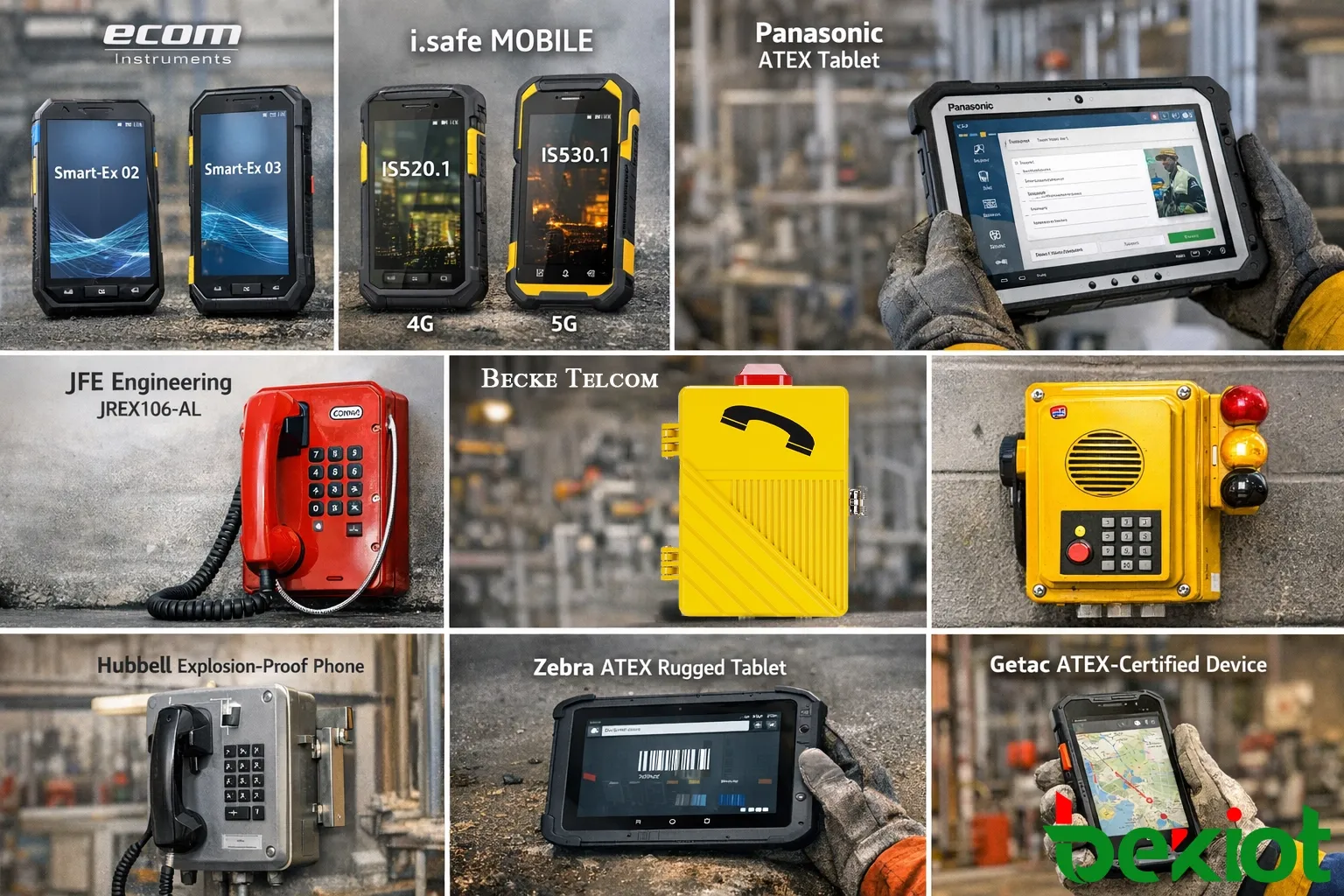
Ecom Instruments: Ecom is a well-known manufacturer of explosion-proof communication devices, particularly in Europe. They offer a variety of ATEX-certified telephones and mobile phones under their “Smart-Ex” series. For example, the Ecom Smart-Ex 02 is an ATEX/IECEx certified smartphone for Zone 1/21, featuring a 4G LTE connection and a replaceable battery . The Ecom Smart-Ex 03 is a newer model that supports 5G and LTE, providing advanced data capabilities in hazardous environments . Ecom also produces analog explosion-proof telephones and other communication devices. They are known for integrating with connected worker solutions and have a strong presence in industries like oil & gas and petrochemicals.
i.safe MOBILE: i.safe MOBILE is a German manufacturer specializing in intrinsically safe mobile devices. They offer a range of ATEX/IECEx-certified smartphones such as the i.safe IS520.1 (a 4G rugged smartphone for Zone 1) and the i.safe IS530.1 (a 4G/5G hybrid smartphone for Zone 1/21) . These phones are designed for field engineers and come with features like dual-SIM support and glove-friendly operation. i.safe also provides accessories like barcode scanners and push-to-talk modules to enhance functionality. Their products are highly regarded for ruggedness and reliability, and they serve customers in Europe, North America, and Asia.
Panasonic: Panasonic is a global electronics company that offers ATEX-certified devices through its rugged mobile solutions. For instance, Panasonic produces industrial smartphones and tablets with ATEX/IECEx certifications, suitable for Zone 1 and Zone 21. These devices combine the performance of consumer smartphones with explosion-proof safety, often used in industries like oil & gas, utilities, and manufacturing. Panasonic’s solutions are known for their durability and integration with enterprise software, making them a popular choice for companies needing mobile communication and data capture in hazardous environments.
JFE Engineering: JFE Engineering is a Japanese company that specializes in explosion-proof equipment, including communication devices. They offer ATEX/IECEx-certified telephones such as the JFE JREX106-AL, an analog explosion-proof telephone designed for mining and industrial use . JFE’s telephones are known for their reliability and are often used in mining and power generation facilities. They also produce other explosion-proof communication systems and have a strong presence in the Asia-Pacific region.
BARTEC: BARTEC is a German manufacturer of explosion-proof devices, including communication solutions. They offer ATEX-certified telephones and intercom systems. For example, BARTEC provides ATEX intercom stations and emergency phones used in hazardous areas like tunnels, industrial plants, and mines. Their products are designed to be durable and easy to install, and they often come with advanced features like sound and light alarms for emergency calls. BARTEC’s solutions are trusted in industries requiring reliable communication in extreme conditions.
Hubbell Incorporated: Hubbell is a North American company that manufactures explosion-proof equipment, including telephones. They offer ATEX/IECEx-certified telephones for Zone 1 and Zone 2 environments. These phones are typically analog models used in industrial settings. Hubbell’s products are known for meeting stringent safety standards and are often used in oil & gas, chemical, and manufacturing industries in North America and globally. They also provide accessories like wall-mount brackets and power supplies for their phones.
Zebra Technologies: Zebra is a leading provider of enterprise mobile computing solutions. While primarily known for barcode scanners and mobile computers, Zebra also offers ATEX/IECEx-certified mobile computers and tablets that can be used for communication purposes (for example, running communication apps). Their devices are rugged and can be integrated with communication software, making them suitable for use in hazardous areas where data capture and communication are both needed. Zebra’s solutions are often deployed in industries like utilities, field services, and manufacturing, where workers need to communicate while also collecting data.
Getac: Getac is another manufacturer of rugged mobile devices that offers ATEX/IECEx-certified models. Getac’s smartphones and tablets are built to withstand harsh conditions and have been certified for hazardous environments. They are used in various industries, including oil & gas, mining, and emergency services, to provide reliable communication and data access. Getac’s products are known for their robust design and long battery life, which are important for continuous use in the field.
Becke Telcom:Becke Telcom is a seasoned manufacturer specializing in industrial-grade explosion-proof telephones. Leveraging its deep expertise in explosion-proof communication technology, they have created the EX-BH621 explosion-proof telephone, which boasts industrial-grade protection and is widely used in various industrial scenarios.
Other Notable Manufacturers: In addition to the above, companies like Ascom (Switzerland), RugGear (China), Aegex Technologies (USA), Extronics (UK), Exloc Instruments (Canada), and Sonim Technologies (USA) are also active in the explosion-proof communication device market. These companies offer a mix of smartphones, two-way radios, and specialized telephones. For example, Extronics provides ATEX wireless solutions (like Wi-Fi and Bluetooth modules) to extend communication capabilities in hazardous areas, and Aegex focuses on explosion-proof laptops and tablets for data-intensive tasks in Zone 1 environments. Each of these manufacturers has its own strengths – whether it’s in rugged hardware, software integration, or wireless communication – and many offer comprehensive solutions for hazardous area communication needs.
When choosing a model, it’s important to consider factors like the specific zone requirements, desired functionality (voice only, data, etc.), and regional certifications. The chart below illustrates the price range for some of the leading ATEX-certified smartphones on the market, highlighting the significant cost differences based on their capabilities and certifications.
Installation and Maintenance of ATEX Explosion-Proof Telephones
Proper installation and maintenance of ATEX explosion-proof telephones is essential to maintain their safety and performance over their lifecycle. These devices must be installed and maintained in accordance with the manufacturer’s instructions and the requirements of the ATEX directive to ensure continued compliance and reliability.
Installation Requirements: Before installation, it’s important to verify the zone classification and ensure the phone is suitable for that zone. The phone’s nameplate should match the zone, gas/dust group, and temperature class of the area. The installation should be carried out by qualified personnel who are familiar with hazardous area installation practices. Key installation steps include:
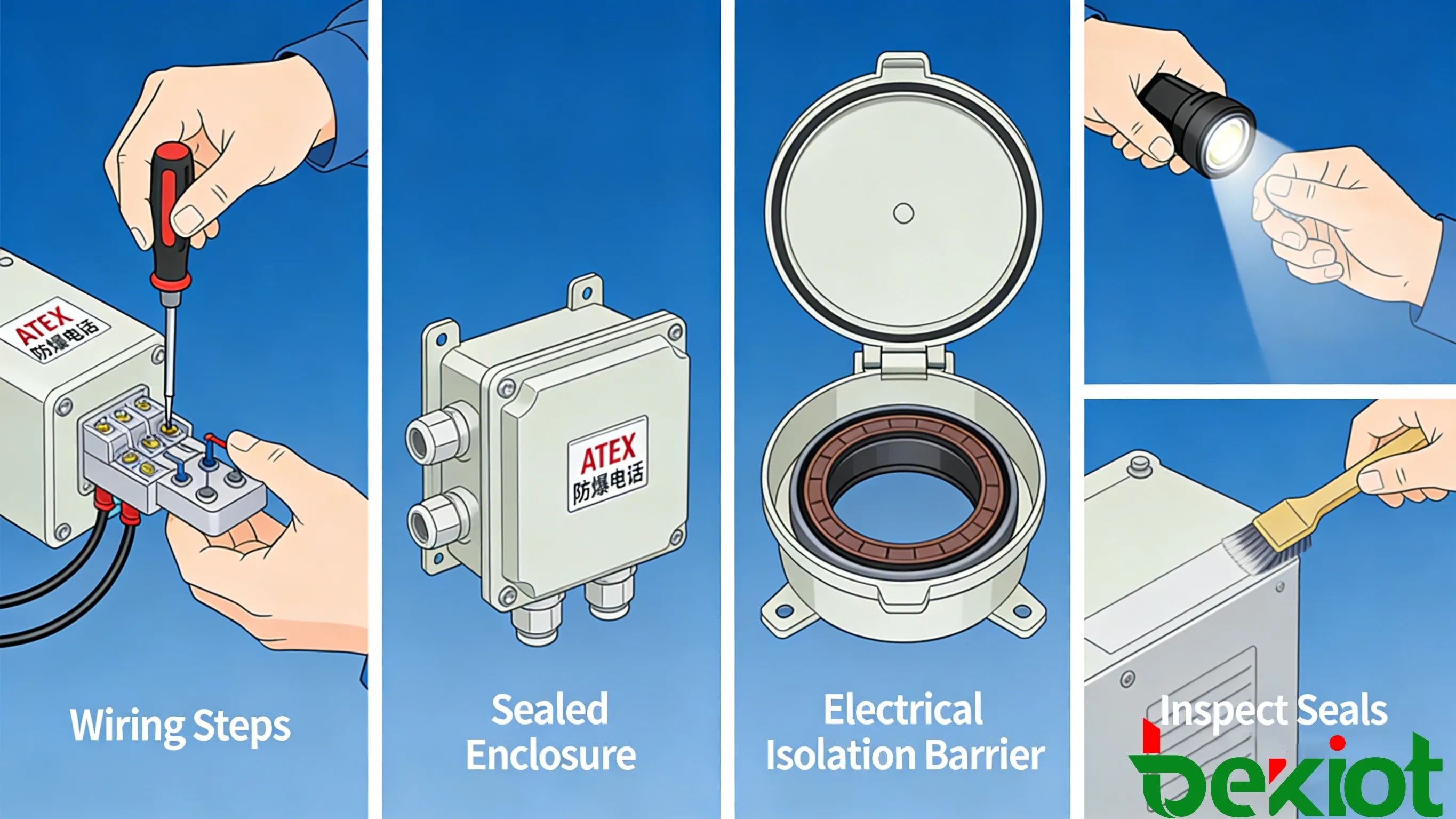
Correct Enclosure and Marking: Ensure the phone’s enclosure is properly mounted and sealed. Use certified cable glands to seal the cables entering the enclosure, maintaining the IP rating and preventing any explosive atmosphere from entering . The nameplate with the ATEX/Ex marking must be clearly visible and legible after installation. All cables and connections must be made according to the wiring diagram provided by the manufacturer.
Electrical Isolation and Barriers: For intrinsic safety (Ex i) telephones, the associated IS barrier must be installed in a safe area (not in the hazardous zone). The barrier’s specifications must match the phone’s requirements. The phone’s cable from the barrier must be identified as an intrinsic safety circuit (often marked with a special color or tag). Proper isolation transformers or surge protectors might also be required to protect the phone from electrical surges .
Mounting and Support: Mount the phone in a location that is easily accessible for use but does not compromise the explosion-proof integrity. Use approved mounting brackets or supports. The phone should be securely fastened to prevent it from falling or being dislodged, which could affect its sealing. If using a wall-mounted phone, ensure the mounting hardware is suitable for the phone’s weight and the wall’s strength.
Grounding and Bonding: If required by the installation standard, ensure proper grounding of the phone and any associated equipment. Grounding helps in dissipating static electricity and ensures that in case of a fault, the electrical energy is safely conducted to ground. This is especially important for Ex i systems to maintain their safety integrity.
Testing After Installation: After installation, perform basic tests to ensure the phone is functioning correctly. This might include checking that the phone rings and can be answered, that the microphone and speaker work, and that any emergency features (like an SOS button) function as intended. Also, verify that the enclosure is still sealed and that no dust or moisture has entered. If any issues are found, they should be addressed immediately before the phone is put into service.
Maintenance Guidelines: Regular maintenance is crucial to keep the ATEX explosion-proof telephone in safe working condition. Maintenance tasks should be carried out by trained personnel and should follow the manufacturer’s maintenance schedule and instructions. Key maintenance considerations include:
Periodic Inspections: Schedule routine inspections of the phone. Check for any signs of damage, such as cracks in the enclosure, loose connections, or worn components. The seals and gaskets around the enclosure should be inspected for wear or damage – replace any seals that are cracked or no longer providing a proper seal. Ensure that the cable glands are tight and that the cable connections are secure. All mounting hardware should be checked for tightness.
Cleaning: Keep the phone and its surroundings clean. Dust and debris can accumulate on the phone and in the enclosure. Use a soft, dry cloth to clean the exterior of the phone. If necessary, a slightly damp cloth can be used for stubborn dirt, but ensure the phone is dry afterward. Avoid using abrasive cleaners that could damage the enclosure or coatings. For dust-prone environments, consider cleaning more frequently or using compressed air to blow out dust from vents or crevices. However, do this carefully to avoid causing any damage.
Lubrication: If the phone has moving parts (such as a keypad or door hinges), lubricate them as recommended by the manufacturer. Use only the lubricants specified, as using the wrong lubricant could affect the explosion-proof integrity or cause corrosion. Lubrication helps ensure smooth operation and can prevent wear and tear.
Battery Maintenance (for phones with batteries): If the phone has a rechargeable battery, follow the manufacturer’s guidelines for battery care. This may include charging the battery correctly, replacing it when it reaches the end of its life, and storing it properly when not in use. Intrinsically safe batteries must be replaced with approved spare batteries to maintain the phone’s safety certification.
Software and Firmware Updates: For explosion-proof smartphones or VoIP phones, keep the software up to date. Manufacturers may release updates for security, performance, or new features. Ensure that any firmware updates are done safely and in compliance with the manufacturer’s procedures. Unapproved firmware modifications can invalidate the ATEX/IECEx certification, so always use the manufacturer’s recommended update process .
Testing and Calibration: Periodically test the phone’s functionality. This can include checking the ring volume, microphone sensitivity, and speaker output to ensure they remain within acceptable limits. If the phone has any built-in test functions or diagnostic tools, use them to verify the device is operating correctly. For intercom systems or emergency phones, ensure that any alarm or auto-dial features are working as intended.
Documentation and Records: Maintain records of all maintenance activities. This includes inspection dates, any repairs or replacements made, and the results of tests. Keeping good records helps demonstrate compliance with safety regulations and can be useful for trend analysis (identifying if certain components need more frequent attention). It also helps in maintaining the equipment’s traceability and warranty.
Replacement Parts: When replacing parts, use only genuine spare parts provided by the manufacturer or an authorized supplier. Using non-certified or incompatible parts can compromise the phone’s explosion-proof integrity. The manufacturer’s parts are designed to meet the same standards and will be certified to work with the phone. If a part needs replacement, ensure it is of the correct type and rating.
Maintenance Personnel Training: Ensure that the personnel performing maintenance are trained in hazardous area maintenance procedures. They should be familiar with the ATEX directive and the specific requirements for the phone. Proper training reduces the risk of accidental damage during maintenance and ensures that any issues are detected and addressed safely.
By following these installation and maintenance practices, an ATEX explosion-proof telephone can continue to operate safely and reliably throughout its life. It’s important to treat maintenance as an ongoing process – regular checks and upkeep prevent small issues from becoming big problems and ensure the phone remains in compliance with safety standards. Properly maintained explosion-proof telephones not only protect workers but also contribute to the overall safety and efficiency of operations in hazardous environments .
Future Trends in ATEX Explosion-Proof Telephones
The field of ATEX explosion-proof telephones is evolving in response to technological advancements and changing industry needs. Some of the key future trends include:
Integration of IoT and Connectivity: As industries move towards Industry 4.0 and IoT (Internet of Things), explosion-proof telephones are expected to become more integrated with IoT devices and systems. This means future phones may include built-in sensors (for temperature, gas detection, etc.) and the ability to transmit data to central control systems. For example, a future ATEX phone might serve as a mobile gateway for IIoT, allowing workers to pair it with sensors and automatically upload data to cloud-based safety management systems . This integration can improve safety by providing real-time monitoring and alerts, while also enhancing operational efficiency by enabling data-driven decision-making in the field.
5G and Advanced Wireless Communication: The rollout of 5G networks is a significant trend. 5G offers much higher speeds, lower latency, and greater capacity than previous generations of mobile networks. In hazardous environments, this means future ATEX smartphones and radios will likely support 5G connectivity. 5G’s low latency (≤10ms) is particularly valuable for critical applications – for instance, in offshore platforms, a 100ms delay in hazard alerts could be catastrophic, but 5G can transmit data (like sensor readings or video) instantaneously to onshore control centers . Additionally, 5G enables the deployment of ex-proof wireless networks (using intrinsically safe Wi-Fi and Bluetooth devices) for things like wireless intercoms, remote control, and asset tracking. We can expect to see more wireless solutions (with proper intrinsic safety approvals) that reduce the need for extensive wiring in hazardous areas.
Smartphone and Tablet Technology: The line between traditional telephones and general-purpose mobile devices is blurring. Future ATEX explosion-proof phones will likely resemble modern smartphones in functionality, with high-resolution displays, powerful processors, and extensive app ecosystems. Companies are already producing ATEX-certified smartphones that run Android or Windows, allowing workers to use familiar mobile apps (email, maps, work management apps, etc.) in hazardous zones. This trend towards “smart” explosion-proof devices will continue, providing workers with greater data access and productivity tools while maintaining safety. For example, a future ATEX phone might be used for AR (augmented reality) applications to overlay work instructions onto a worker’s view, or for remote assistance via video calls with experts, all while being safe in a Zone 1 environment.
Enhanced Durability and Environmental Resistance: As technology advances, explosion-proof devices are becoming more rugged and resilient. Future trends include even higher IP ratings (such as IP68 or IP69K for complete protection against dust and water, including high-pressure washdowns), and better resistance to extreme temperatures. There is also development of materials that can handle more corrosive environments (e.g. more resistant coatings or materials for enclosures). We may see devices that can withstand being submerged or exposed to harsh chemicals for extended periods, making them suitable for a wider range of industries. Additionally, ruggedized components (like drop-resistant displays, shock-resistant batteries, etc.) will be standard in future phones to ensure they can endure the rigors of field use in hazardous areas.
Improved Audio and Human-Machine Interfaces: Future ATEX phones are likely to have even better audio capabilities, including more advanced noise-canceling microphones and high-fidelity speakers to improve communication clarity in noisy environments. There may also be more emphasis on user-friendly interfaces – for example, touchscreens with glove support, voice control features, or even haptic feedback to provide tactile responses for users (especially useful in loud or dark environments). Some devices might incorporate emergency notification systems that use both audio and visual alerts (like strobe lights or vibration) to ensure workers are alerted even if they cannot hear the phone ring.
AI and Predictive Maintenance: With the increasing connectivity of devices, there is a trend towards using AI and predictive analytics for maintenance. Future explosion-proof telephones could include sensors to monitor their own health (e.g. battery condition, temperature, vibration), and use AI to predict when maintenance is needed. This could involve notifying technicians when a component is nearing the end of its life or if the device has been dropped and might have internal damage. Predictive maintenance can reduce downtime and improve the reliability of communication systems in hazardous areas.
Greater Integration with Safety Systems: ATEX phones are expected to become more tightly integrated with other safety systems in industrial plants. For instance, they might be linked to emergency shutdown systems, allowing a worker to trigger an alarm or shutdown from the phone. They could also integrate with location tracking systems (like RTLS – Real-Time Location Systems) to track worker locations in real-time, which is crucial for safety in large facilities. The ability to receive safety alerts directly on the phone (such as gas leak warnings or evacuation alerts) will likely be enhanced, making the phone not just a communication device but also a safety information hub.
Standards and Certification Updates: The standards themselves are evolving. The latest edition of IEC 60079-11:2023 (intrinsic safety) introduces significant changes that will affect both new and existing certified products . This means future ATEX phones will need to comply with updated standards, possibly leading to improvements in energy-limiting designs, component selection, and testing procedures. Manufacturers are continuously updating their products to meet these new standards, ensuring the highest level of safety as technology progresses .
In conclusion, the future of ATEX explosion-proof telephones will be characterized by greater connectivity, intelligence, and integration. These devices are evolving from simple voice communication tools to advanced, multi-functional platforms that enhance safety and efficiency in hazardous environments. As industries continue to push for safer and more productive operations, we can expect explosion-proof telephones to play an increasingly important role, leveraging the latest technologies while remaining steadfast in their primary mission: ensuring safe communication in the most challenging conditions.
Conclusion
ATEX explosion-proof telephones are indispensable tools in industries where the risk of explosions from flammable gases, vapors, or dusts is ever-present. They provide a safe means of communication that protects workers and operations, complying with stringent safety standards to prevent ignition and ensure reliability. From analog landline phones in oil refineries to cutting-edge smartphones used by field engineers, these devices have evolved to meet the diverse needs of hazardous environments.
Key takeaways include understanding the importance of ATEX/IECEx certifications and how to choose a phone that matches the zone and atmosphere, the robust design features that make these phones safe and durable, and the various types available (analog, VoIP, smartphones, radios, etc.) that cater to different communication requirements. By selecting the right phone and properly installing and maintaining it, companies can maintain continuous communication while adhering to safety regulations.
As technology advances, we anticipate even smarter and more connected explosion-proof telephones on the horizon – incorporating IoT, 5G, AI, and enhanced safety features. These future trends promise to further improve worker safety and operational efficiency in hazardous areas. However, regardless of future innovations, the fundamental role of ATEX explosion-proof telephones remains clear: to keep people connected and safe in environments where a moment’s lapse in safety could have catastrophic consequences. Investing in the right ATEX-certified communication equipment is not just a compliance requirement; it is a commitment to the safety of personnel and the continuity of operations in some of the most challenging industrial settings.

 English
 Deutsch
 한국어
한국어 Русский
 Français
 日本語
日本語 لالعربية
 हिन्दी
 Español
 Português
 繁体中文
繁体中文 简体中文
简体中文